
Sabrina Torelli. Simpatia Cosmica; De mi amor mi canto
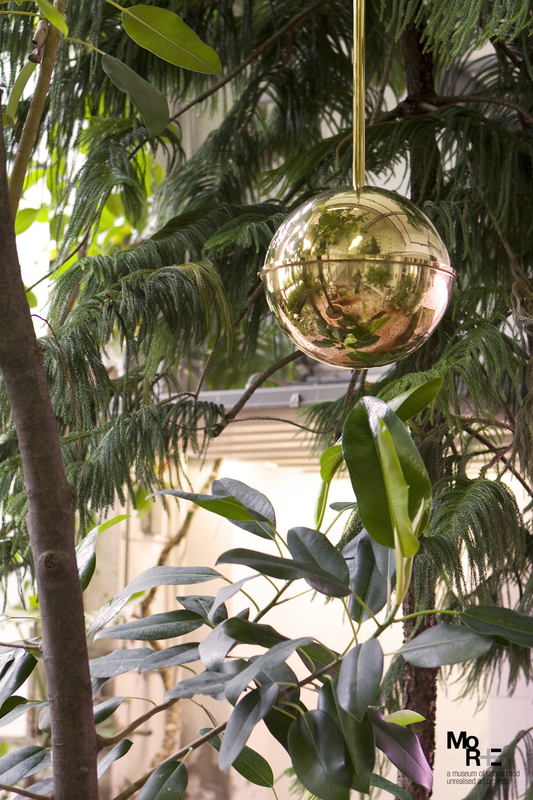
Picture of the prototype work exhibited at the Botanical Garden of Parma in 2008
Torelli proposed two projects for the Department of Pediatric Oncology at Sant’Orsola Hospital in Bologna: Simpatia Cosmica (Cosmic Sympathy), for the diagnostic communication room (BCM), and De mi amor mi canto, for the area where the deceased were kept.
The first project consisted of the creation of a series of nine to twelve large circles, measuring 60 cm in diameter, representing a variety of animals that, according to Native American medicine, act as mediators, connecting human beings with the elements of nature and influencing their state of equilibrium, the alteration of which causes illness. These “crests”—mounted on a concealed frame and featuring black-and-white line drawings—were intended to communicate in a manner analogous to the symbols located in the right hemisphere of the brain, associated with intuition and creativity. According to the artist, who also referred here to a personal experience of care, they could therefore open the consciousness to the realm of dreams, from which the first signs of recovery might emerge.
In the project description, the artist explains, following a conversation with psychologist Dorella Scarponi, the emotional dynamics affecting parents during the conversations in which doctors communicate their child’s diagnosis to them. The conversation lasts approximately two hours, during which doctors explain the diagnosis and the treatment that the child will undergo. As Torelli writes: “Communicate, try to be understood, repeat and repeat, is the great ‘dragon’ that doctors face every time they cross that doorstep, because very little or nothing remains in memory to the family and the difficulty of understanding in an emotional state push them to repeat always the same questions” (progetto S.T.02 de mi amor mi canto.pdf).
The crests—described as the “fathers” of nature—were intended to act as mediators, at a moment of pain, between the emotional and irrational shock experienced by the parents and the scientific nature of medicine and care, symbolically represented by taking the hand of those in difficulty.
The second project, De mi amor mi canto, instead consisted of the installation of a brass sphere measuring 40 cm in diameter in the area of the Department of Pediatric Oncology at Sant’Orsola-Malpighi Hospital in Bologna where the deceased were kept. The sphere, chosen for the meanings attributed to the circular form, which combines life and death and alludes to the cyclical rhythms of nature, was intended to emit a three-minute recording alternating the song of a nightingale in captivity with that of a nightingale in the wild. The issue of communication is central: as the artist explains, “When it sings for itself, free in the nature, its melody is simple and spontaneous, but in captivity, when it sings for others, the sound changes, it is harmonious and varied modulated with extreme and rare delicacy. (...) A song of medicine and the medical term refers here to all those forces that have a positive effect on men” (progetto S.T.02 de mi amor mi canto.pdf). The sphere was realised and exhibited as part of the 2004 exhibition at the GAM in Bologna, but was never installed in the location for which it was intended, namely the area of the department where the deceased were kept.
The project forms part of a series of works by Sabrina Torelli focusing on non-verbal communication and the study of the language of birds. Initiated in 2004, the series comprises, among others, Parable (2004), De mi amor mi canto (2004), Breathe and Magic Flight (2004), and Awakenings (2008), and is still ongoing.
Page of the catalog published for the exhibition SPA Salus per Arte, GAM of Bologna
Page of the catalog published for the exhibition SPA Salus per Arte, GAM of Bologna
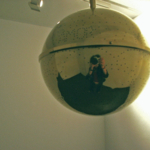
Picture of the prototype work exhibited at GAM in Bologna