
Silvia Cini. Plastic Oplalà
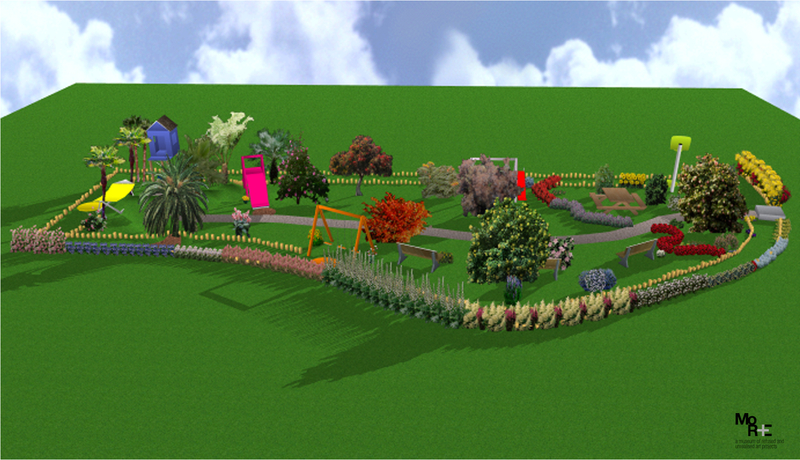
Details of the garden - 3D botanical garden
For the department, Cini envisioned the project PlasticOplalà 1, 2, 3, a series of site-specific interventions conceived around the idea of creating a small botanical garden outside the pavilion, in the semi-abandoned garden of the paediatric department. The project included a botanical garden featuring a variety of plant species, creating a path of discovery, together with a playground incorporating the classic outdoor games found in parks, such as slides and swings. The garden could be experienced as a playground, as a botanical garden—each plant was to be accompanied by a short caption and a fairy tale from its country of origin—and as a game in itself. It was structured into six coloured areas: the first player throws a die and is assigned a colour, and can move onto the platform of the corresponding colour only if they can name a plant or flower associated with that area of the new platform. There are no winners in the game, but only the pleasure of knowledge and sharing.
The garden was further divided into three areas: the Garden of Scents and Smells, the Garden of Flavours, and the Tropical Garden. On the basis of this proposal, Cini envisioned three different developments of the project, based on the idea of progressive enlargement—from the children’s rooms, to the playroom, and finally to the area outside the hospital.
PlasticOplalà#1 consists of 3D software that allows users to access and fly over the garden itself and is conceived almost as a video game. The user/player can set their own point of view and move through the garden or fly over it as if they were on board a helicopter.
The installation PlasticOplalà#2, exhibited at the GAM, was conceived for the playroom of the oncology department. It consists of seven inflatable cubes covered in canvas, with which the children can play. Each cube has a different colour corresponding to those of the platforms in the garden, and each features an image of two plants, together with a panel containing technical information and the tale associated with the country of origin of the depicted plant.
PlasticOplalà#3 consists of a box made of coloured canvas, with a panoramic image of the future garden depicted on its cover. Inside are seven small, soft cubes, scaled-down versions of those created for the playroom. The box was intended for the patients’ rooms, particularly for children undergoing post-transplantation treatment who spend a period of time in forced isolation under aseptic conditions. Designed to be placed inside the cupboards, the box was conceived as an invitation to play, should the child wish to do so, while waiting to be able to go outside and play in the real garden.
The project forms part of Silvia Cini’s artistic practice in its openness to contexts other than conventional exhibition spaces and its engagement with social contexts. A precedent can be found in the work she created for the exhibition Empowerment Italy (curated by Marco Scotini, Villa Croce and Villa Bombrini, Genoa, 2004), devoted to the theme of breastfeeding, which Cini discusses in the attached interview (Intervista a Silvia Cini, Dialoghi, curated by UnDo.net.pdf).
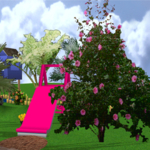
Details of the garden - 3D botanical garden
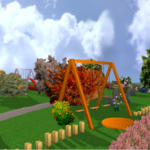
Details of the garden - 3D botanical garden
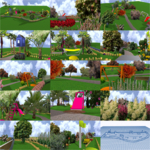
Details of the garden - 3D botanical garden
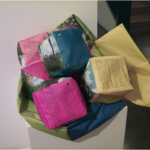
PlasticOplalà # 2 seven inflatable cubes covered with canvas