
ROOM 4. UNREALISED WORKS: COMMISSIONING
One of the largest rooms in the exhibition is dedicated to the numerous projects refused by institutions and professionals in the field that are preserved in MoRE. For this occasion, we have selected a range of cases involving both public bodies—the museum and municipal administrations, through competitions or, more rarely, direct commissions—and private organisations. This is accompanied by a reflection on the role and figure of the curator.
THE MUSEUM
The case presented here is that of Regina José Galindo, who, invited to participate in a performance programme at the MADRE Museum in Naples (Corpus. Arte in azione, 7–26 June 2010), proposed an action entitled Coraza (2010), related to a “training exercise” practised by the Camorra, in which members trained themselves to shoot at a man positioned a short distance from the shooter. Galindo conceived a performance in which a man would actually have to shoot her. Although the use of a bulletproof vest was planned, the performance was not accepted by the museum, which considered it too dangerous, and instead opted for the artist’s second proposal, the action entitled Caparazón (2010).
The contemporary debate is, moreover, full of striking cases in which institutions or museum curators have opted for choices other than those proposed and envisaged by the artist. A different case, in terms of both its motivations and ideology, which has recently been the subject of debate is the outright censorship of Blu’s work at the MOCA in Los Angeles. This case also raises questions about the boundary between what is and is not realised: should Blu’s wall—painted, photographed and erased after 24 hours when Jeffrey Deitch saw it for the first time—be considered an unrealised work because it was ultimately not present in the street-art exhibition in the City of Angels, or should it be considered realised because it was nevertheless painted, communicated and seen by thousands of people through documentation disseminated online?
— PUBLIC ADMINISTRATION AND COMPETITIONS
One of the most traditional forms of public commissioning is the competition. The archive contains several unselected and unsuccessful works submitted to competitions, such as Arciteatro (2000) by Grazia Varisco, Fourth Plinth Proposals(2008) by Jeremy Deller, and Il fiore e la pietra (2002) by Debora Hirsch. The latter project seems particularly indicative of the contemporary Italian situation: conceived for a competition, the work was never realised, as was any of the other projects submitted on that occasion, due to a lack of funding.
— THE GALLERY AND PRIVATE ORGANISATIONS
The considerations surrounding the decisions and dynamics governing private commissioning are different. In this exhibition, we present two projects that were refused and consequently remained unrealised.
The first, Inviti (1992) by Cesare Pietroiusti, imagined, after the installation of an exhibition (any exhibition), the participation at its opening of a group of prostitutes paid for their “service” of simply being present. The Roman private gallery where the unusual performance was due to take place cancelled the event just a few days before the opening, probably driven by considerations related less to ethical questions than to the comprehensibility and appeal of the proposal to its audience, as well as the marketability of the works themselves.
We believe that considerations of aesthetic appreciation also determined the refusal of another work preserved in MoRE, Scala (2009) by Valerio Berruti. The project, commissioned by a bank and subsequently not realised, consisted of a fresco extending along the staircase of the building housing the financial institution.
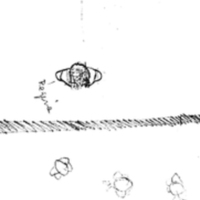
Regina Josè Galindo, Coraza (2010).
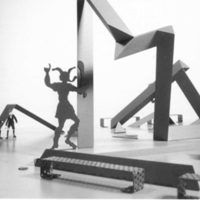
Grazia Varisco, Arciteatro (2000)
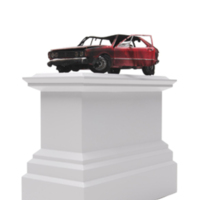
Fourth Plinth Proposals (2008)
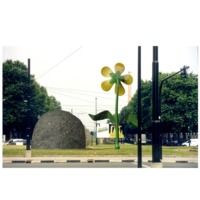
Debora Hirsch, Il fiore e la pietra (2002).
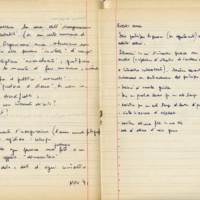
Cesare Pietroiusti, Inviti (1992)
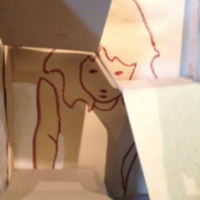
Valerio Berruti, Scala (2009)